





 Post by
 In 2025, no-code development is no longer just a trend—it’s a revolution. Organizations around the world are embracing no-code and low-code platforms to reduce development time, lower costs, and enable non-technical teams to build powerful applications. From startups to enterprises, the ability to create without code is redefining how we approach software development. At Neoline Logic, we specialize in custom software development and web development that integrate seamlessly with no-code platforms, empowering businesses to innovate rapidly and efficiently.
This blog dives deep into no-code development in 2025, what tools are leading the charge, and how businesses can leverage them to stay ahead. Whether you’re looking to design intuitive user interfaces or automate workflows, Neoline Logic provides the expertise and solutions to help you navigate the evolving landscape of no-code development.
What Is No-Code Development?
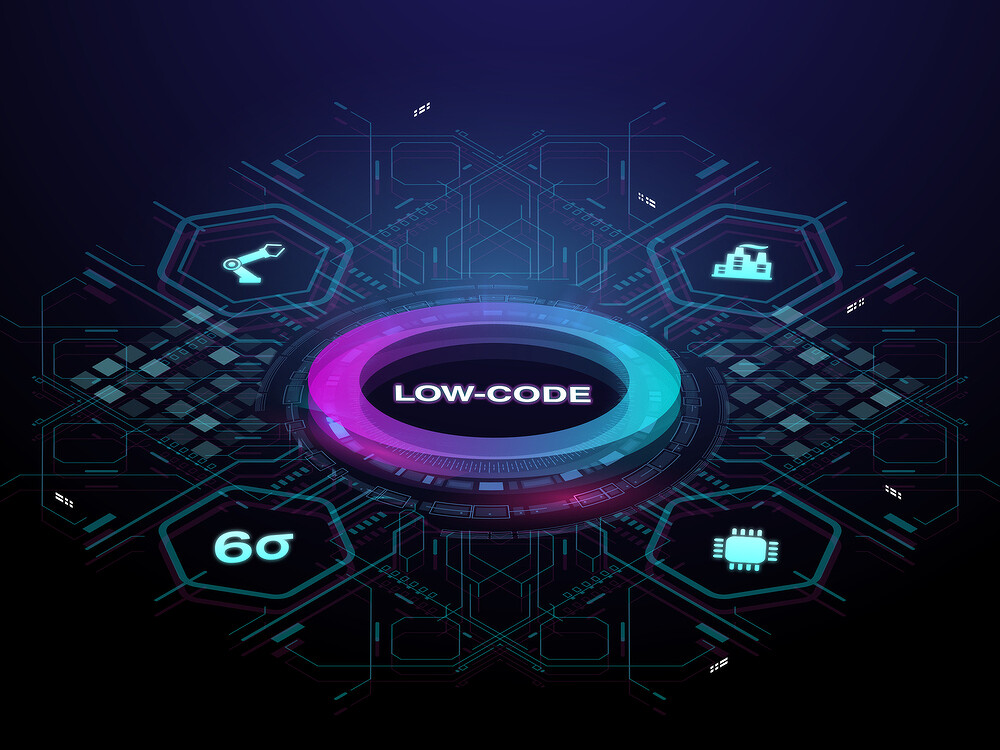
No-code development refers to the creation of software applications through visual interfaces and drag-and-drop components rather than traditional programming. Users can design, test, and deploy apps with minimal to zero coding experience.
Popular platforms like Bubble, Glide, Webflow, and Airtable are making it easy for entrepreneurs, marketers, and operations teams to build internal tools, websites, and customer-facing apps without engineering support.

Why No-Code Development Is Booming in 2025
Speed to Market
No-code tools allow businesses to build and launch applications up to 10x faster than traditional development.Lower Costs
Companies save on hiring developers or agencies. Most no-code platforms operate on a subscription basis, reducing upfront investment.Empowered Teams
Teams can solve their own problems without waiting for IT support—marketing, HR, and operations are building tools on their own.Remote Collaboration
With global workforces, real-time collaboration features in no-code tools are helping distributed teams innovate from anywhere.
Key No-Code Development Trends in 2025
1. Integration-First Platforms
Modern no-code platforms now come with built-in integrations to CRMs, ERPs, payment processors, and AI services. Zapier, Make, and Pabbly Connect have become standard companions in every no-code stack.
2. AI-Enhanced App Builders
No-code builders are integrating AI to offer smart form builders, content generators, predictive analytics, and real-time data optimization. This is making applications more dynamic and intelligent without coding.
3. Native Mobile App Development
2025 sees no-code tools like Adalo, FlutterFlow, and Bravo Studio offering true native app performance. These platforms are giving entrepreneurs the power to launch apps on both iOS and Android with no technical background.
4. Scalable Backend-as-a-Service (BaaS)
Platforms such as Xano and Supabase are enabling users to build powerful custom backends using a visual interface—bridging the gap between no-code frontends and scalable, logic-rich APIs.
Use Cases in 2025
- Startup MVPs – Quickly validate ideas and launch to market without fundraising
- Internal Tools – HR apps, inventory dashboards, CRM tools built by non-dev teams
- Ecommerce Platforms – Launch full online stores with Webflow, Shopify, and Zapier
- AI-Driven Customer Support – No-code chatbots integrated with ChatGPT via APIs
Challenges of No-Code Development
Despite its power, no-code development in 2025 has some limitations:
- Customization Limits – Deep logic or advanced features still require custom code
- Scalability Concerns – Some platforms struggle with large-scale traffic or data volumes
- Vendor Lock-In – Migrating from one platform to another can be difficult
- Security Gaps – Not all no-code platforms meet enterprise-grade compliance
In 2025, businesses are combining no-code with low-code tools and AI assistants to deliver fast, flexible, and powerful digital solutions. Whether you’re a startup building your first product or a global brand empowering internal teams, no-code development is a competitive advantage you can’t afford to ignore.
Final Thoughts
The world of no-code development in 2025 is dynamic, accessible, and full of potential. By adopting the right tools and strategy, businesses can accelerate innovation, improve agility, and reduce dependency on traditional dev cycles.
The future of development isn’t just about writing code—it’s about empowering people to build without it.