





 Post by
 The software development landscape is rapidly evolving in 2025, and at the center of this evolution is the rise of AI-powered coding assistants. Tools like GitHub Copilot, ChatGPT’s Code Interpreter, and Amazon CodeWhisperer are transforming how code is written, tested, and deployed. But this advancement brings a critical question into focus: Are traditional coding skills being replaced by prompt engineering?
Let’s explore the shift in developer roles, the benefits and limitations of AI coding assistants, and how the future of software development is being reshaped—one prompt at a time.
What Are AI Coding Assistants?
AI coding assistants are tools powered by machine learning models trained on billions of lines of code. These tools:
- Suggest code completions in real-time
- Auto-generate functions or classes
- Translate natural language prompts into working code
- Detect bugs and optimize performance
- Examples in 2025 include:
- GitHub Copilot X – Now integrated with pull requests, terminal commands, and test generation
- ChatGPT-4.5 (Code Interpreter) – Real-time code execution and logic building from plain language
- CodeWhisperer – AWS’s answer to AI-assisted cloud-native development
From Developers to Prompt Engineers?
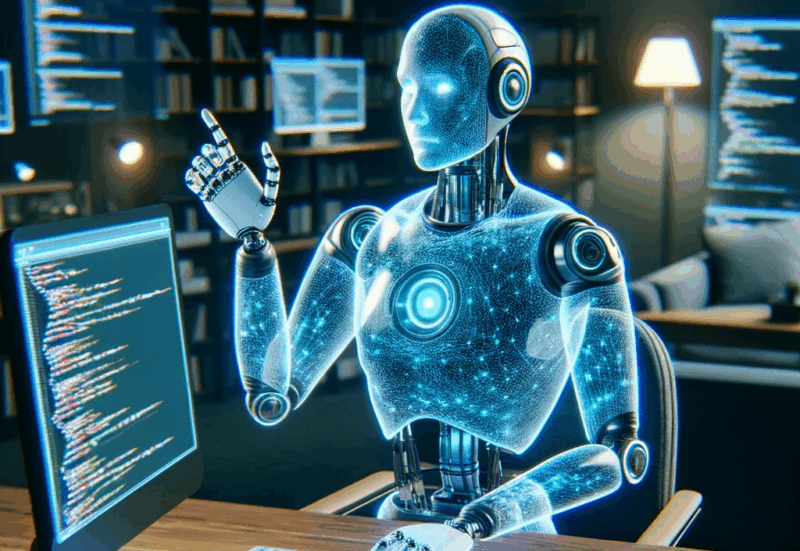
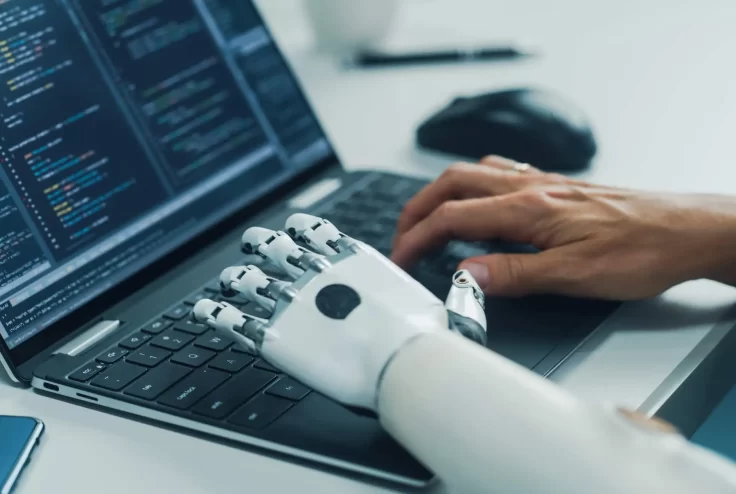
The traditional developer role is based on writing logic manually. In contrast, prompt engineers use natural language to instruct AI to generate code, test cases, or even entire applications.
Key Differences:
Traditional Developer:
- Writes code manually
- Debugs line-by-line
- Deep language knowledge
- Prompt Engineer:
- Writes natural language prompts
- Refines AI output through iteration
- Cross-tool thinking and logic building
Many companies in 2025 now hire prompt engineers specifically to interact with tools like GPT, Midjourney (for UI), and Bard to accelerate workflows.
Benefits of AI Coding Assistants
Speed: Developers complete tasks 30–50% faster on average.
Learning Tool: Junior developers learn best practices by observing suggestions.
Productivity Boost: Less boilerplate writing; focus on architecture and logic.
Error Detection: AI often catches syntax errors and logic gaps on the fly.
Limitations and Risks
- Hallucination of Code: AI might generate syntactically correct but logically flawed code.
- Security Issues: Sensitive data or insecure practices can unintentionally be introduced.
- Over-Reliance: Devs might forget fundamentals, weakening long-term skills.
- Data Privacy: Some assistants send code to cloud servers—privacy matters!
What Skills Are Now Essential?
In this AI-first world, developers in 2025 should focus on:
- Prompt Crafting: Writing clear, precise instructions for AI tools
- System Architecture: Designing scalable systems that AI can help implement
- Code Review & Validation: Understanding when AI output is flawed
- Human-AI Collaboration: Knowing when to step in manually
While AI tools are improving rapidly, they’re still assistants, not replacements. The best results come when human creativity and judgment guide the AI.
Final Thoughts
AI-powered coding tools are not a threat to developers—they’re a force multiplier. But as their capabilities grow, so too must our adaptability.
The coders of tomorrow may not always be typing semicolons—but they’ll be orchestrating intelligent systems with thoughtful, strategic prompts.
In 2025 and beyond, code is no longer just written. It’s designed, directed, and collaborated with AI.