



 Post by
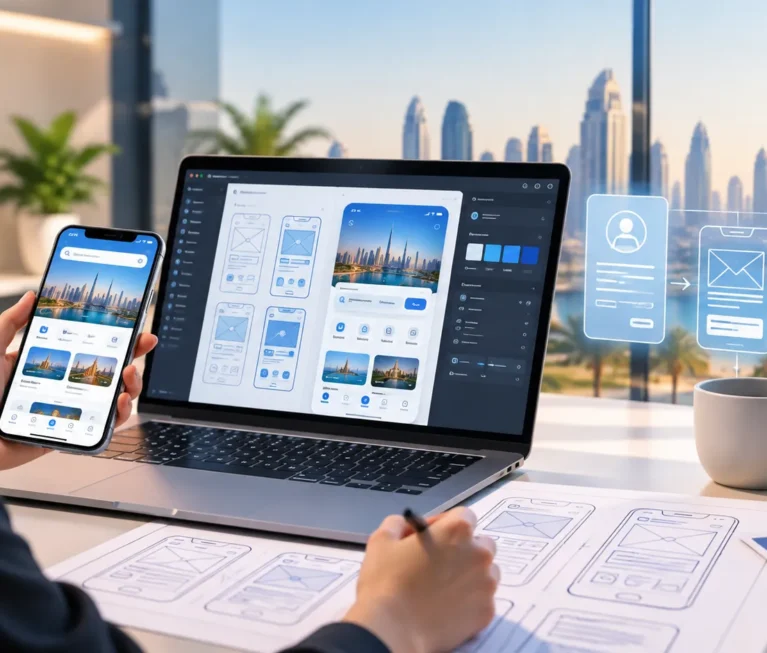
 In the UAE’s hyper-competitive digital landscape, where consumers expect seamless, intuitive experiences across every touchpoint, investing in professional UI/UX design services UAE has shifted from optional to essential. With 99% mobile penetration and digital-savvy consumers who won’t tolerate clunky interfaces, businesses that prioritize user experience design Dubai are seeing measurable improvements in conversion rates, customer retention, and brand loyalty.
Whether you’re launching a mobile app, redesigning your e-commerce platform, or building a SaaS product for the regional market, understanding why UX design improves conversions and how to implement best UI UX practices for UAE market will determine whether your digital product thrives or gets abandoned in favor of better-designed competitors.
What is UI/UX Design and Why It Matters for UAE Businesses
UI (User Interface) design focuses on the visual elements users interact with: buttons, icons, typography, color schemes, and layout. UX (User Experience) design encompasses the entire journey a user takes through your product, including navigation flow, information architecture, usability, and how the product makes users feel.
For UAE businesses, the stakes are particularly high. The local market combines diverse demographics (over 200 nationalities), high purchasing power, and sophisticated digital expectations shaped by global tech giants. A UX design company UAE must navigate:
- Multilingual requirements: Arabic and English interfaces that maintain visual harmony and respect right-to-left (RTL) design conventions
- Cultural sensitivities: Color symbolism, imagery choices, and interaction patterns that resonate with local and expat audiences
- Mobile dominance: Over 75% of UAE internet users access services primarily via smartphones
- High comparison rates: UAE consumers actively compare options and abandon poorly designed experiences quickly
Companies that invest in thoughtful, research-driven design see tangible returns. Studies consistently show that every dollar invested in UX brings $100 in return, a 9,900% ROI driven by reduced development costs, increased conversion rates, and lower customer acquisition expenses.
The Business Impact of Poor User Experience
Poor UX isn’t just frustrating for users; it directly damages your bottom line. In the UAE market, where alternatives are one tap away, the cost of bad design compounds quickly:
Abandoned Purchases: 88% of online consumers won’t return to a website after a bad user experience. In e-commerce, even a one-second delay in page load time can reduce conversions by 7%. For a UAE retailer processing AED 1 million monthly, that’s AED 70,000 lost revenue from a technical UX issue alone.
Support Cost Inflation: Confusing interfaces generate support tickets. When users can’t find features, complete forms, or understand error messages, they contact support. Each unnecessary ticket costs AED 30-150 to resolve. A well-designed interface with clear microcopy and intuitive navigation can reduce support volume by 30-50%.
Brand Perception Damage: In Dubai and Abu Dhabi’s luxury-conscious market, a dated or clunky interface signals that your entire business might be behind the times. 75% of users admit to making judgments about a company’s credibility based on website design alone.
Development Waste: Building features users won’t use or can’t find wastes development resources. UX research identifies what users actually need before engineering teams invest months building the wrong solution.
Key UI/UX Design Principles for the UAE Market
Effective mobile app UI design UAE and web experiences follow universal principles while adapting to local context:
Clarity Over Cleverness
UAE users value efficiency. Navigation should be immediately obvious, CTAs should clearly state what happens when clicked, and forms should explain why each field is required. Avoid vague labels or clever wordplay that doesn’t translate well across languages.
Speed as a Feature
With widespread 5G adoption in the UAE, users expect instant responses. Optimize images, implement lazy loading, and design interfaces that feel fast even when data is loading. Skeleton screens and progress indicators maintain engagement during necessary waits.
Accessibility by Default
Design for diverse abilities from the start. Sufficient color contrast, readable font sizes (minimum 16px for body text), keyboard navigation, and screen reader compatibility aren’t nice-to-haves; they’re requirements that expand your addressable market and often improve usability for everyone.
Localization Beyond Translation
True localization adapts layout for RTL languages, uses culturally appropriate imagery, respects local date and currency formats, and considers cultural context in microcopy. A UI design agency Dubai should demonstrate portfolio work that handles multilingual complexity elegantly.
Trust Signals and Transparency
UAE consumers are cautious about data privacy and payment security. Display trust badges, clearly explain data usage, use secure payment gateways with recognizable logos, and provide visible contact information. Transparency builds confidence that drives conversions.
Visit Best Web Designing Courses in UAE: Complete Guide 2026
Mobile-First UX: Critical for UAE’s Mobile-Heavy Users
The UAE has one of the world’s highest smartphone penetration rates. Mobile isn’t just important; it’s primary. Website UX optimization must start with mobile, then adapt up to larger screens, not the reverse.
Thumb-Zone Design: Place primary actions within easy thumb reach on standard phone sizes. Bottom navigation and floating action buttons outperform top-corner placement for frequently used features.
Touch-Optimized Targets: Buttons and tappable elements should be minimum 44×44 pixels with adequate spacing to prevent mis-taps. This is especially important for forms and checkout flows where errors cause abandonment.
Progressive Disclosure: Mobile screens have limited real estate. Show essential information first, with progressive disclosure for advanced features. Accordions, expandable sections, and multi-step forms work better than long scrolling pages that overwhelm users.
Offline and Low-Bandwidth Scenarios: Even in the well-connected UAE, users travel, use elevators, and encounter connectivity gaps. Design graceful degradation that caches key content and clearly communicates connection status.
Gesture Conventions: UAE users, like global mobile users, expect swipe-to-delete, pull-to-refresh, and pinch-to-zoom where appropriate. Fighting established gesture patterns frustrates users who’ve internalized these interactions from other apps.
UI/UX Design Process: From Research to Launch
Professional UI UX design services UAE follow a structured process that minimizes risk and maximizes user satisfaction:
1. Discovery and Research
Understand business goals, user demographics, competitive landscape, and technical constraints. Methods include stakeholder interviews, user surveys, analytics review, and competitor audits. For UAE projects, this phase should identify language preferences, device usage patterns, and cultural considerations specific to your target segments.
2. User Personas and Journey Mapping
Create data-driven personas representing key user types. Map their current journeys, identifying pain points, moments of delight, and drop-off points. This reveals where UX improvements will have the greatest impact.
3. Information Architecture and Wireframing
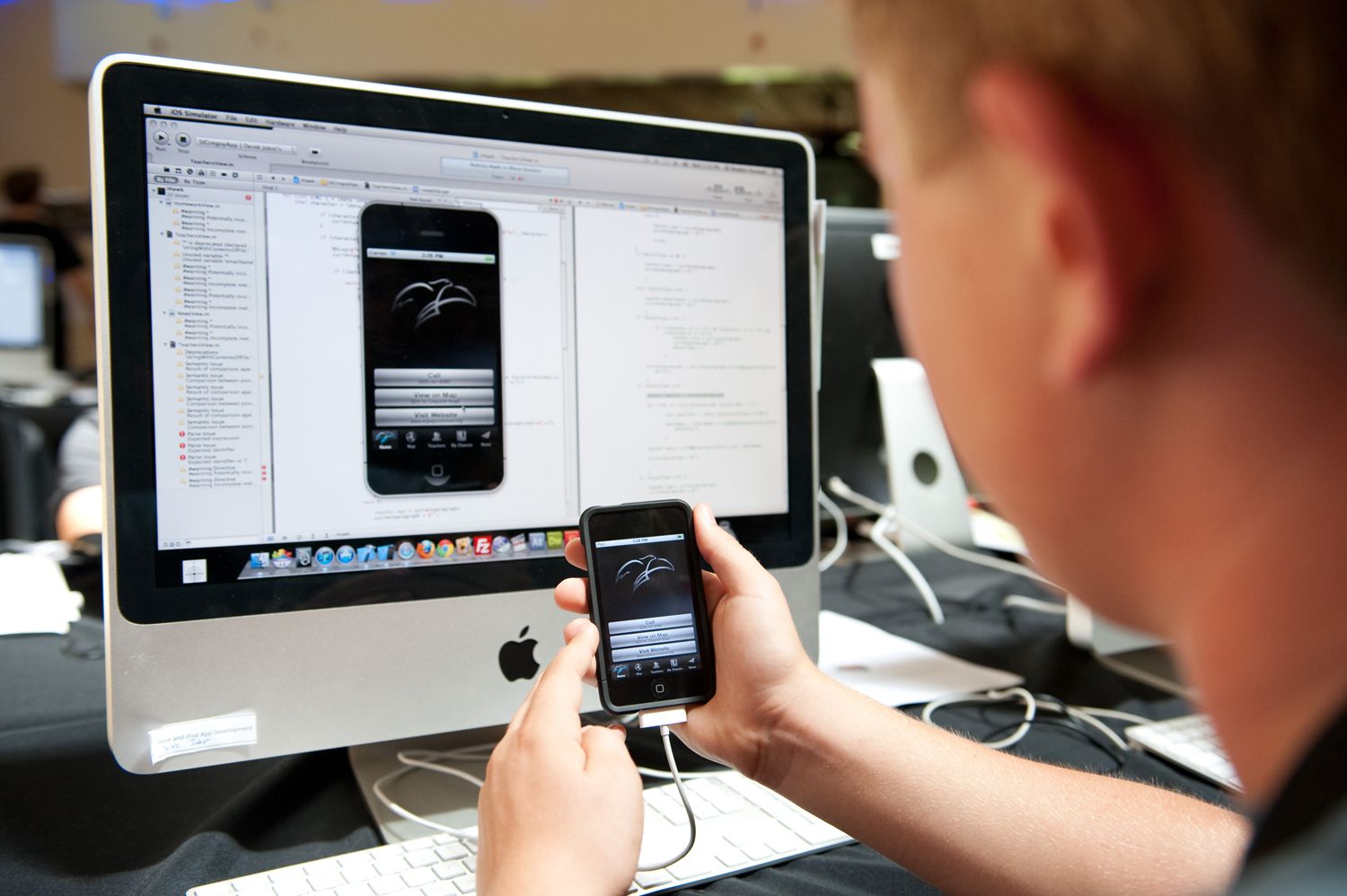
Structure content logically. Wireframes (low-fidelity sketches) test navigation flow and feature placement without visual design distracting from usability evaluation. Card sorting exercises with actual users validate that your organizational logic matches their mental models.
4. Visual Design and Prototyping
Apply brand identity to wireframes, creating high-fidelity mockups. Interactive prototypes let stakeholders and test users experience the interface before development begins. Test both LTR and RTL versions if targeting multilingual audiences.
5. Usability Testing
Watch real users attempt key tasks. Even 5-8 users reveal most critical issues. In the UAE market, test with representative language and demographic groups. Remote testing tools and in-person sessions both provide valuable insights.
6. Development Handoff and QA
Provide developers with detailed specifications, assets, and interaction documentation. Design QA ensures the built product matches approved designs and maintains usability across devices and browsers.
7. Post-Launch Optimization
UX work doesn’t end at launch. Analytics, heatmaps, session recordings, and user feedback identify real-world friction points. Continuous iteration based on actual usage data drives ongoing improvement.
Measuring UX Success: Metrics That Matter
To justify investment and guide optimization, track metrics that connect UX to business outcomes:
Task Success Rate: Percentage of users who complete key tasks (e.g., finding a product, completing checkout, submitting a form). Target 90%+ for critical flows.
Time on Task: How long key actions take. Decreasing time while maintaining accuracy indicates improved efficiency. Benchmark against competitors and your previous version.
Error Rate: Form validation errors, incorrect selections, and support tickets related to confusion. Lower error rates signal clearer design and better guidance.
Conversion Rate: The ultimate commercial metric. Track how design changes impact signup rates, purchase completion, demo requests, or whatever conversion matters for your business model.
Customer Satisfaction Scores: Post-interaction surveys (CSAT, NPS) correlate UX quality with willingness to recommend and repurchase. In the UAE’s word-of-mouth-driven market, this directly impacts customer acquisition cost.
Retention and Engagement: Return visit rates, feature adoption, and session depth indicate whether users find ongoing value. Good UX creates habits; poor UX creates churn.
Choosing a UI/UX Design Partner in UAE
When evaluating why invest in UX design UAE and selecting a partner, look beyond portfolios to process and cultural fit:
Research-Driven Approach: Ask how they validate design decisions. Agencies that rely solely on designer intuition miss insights only real users reveal. Look for evidence of user research, testing, and data analysis in their process.
UAE Market Experience: Have they designed for multilingual audiences? Do they understand local payment preferences, cultural sensitivities, and regulatory requirements (like UAE’s data protection laws)? Generic international experience doesn’t automatically transfer.
Cross-Functional Collaboration: UX doesn’t exist in isolation. Strong partners work seamlessly with your development, marketing, and product teams, adapting to your workflows rather than imposing rigid handoffs.
Measurable Outcomes: Discuss how they’ll measure success. Agencies focused on business impact talk about conversion rates, support reduction, and user satisfaction, not just visual appeal.
Ongoing Partnership vs. One-Off Projects: UX is iterative. Partners who offer post-launch optimization, A/B testing support, and analytics review deliver more value than those who disappear after delivery.
Regarding UI UX design cost UAE, expect AED 15,000-50,000 for comprehensive redesigns of mid-sized websites or apps, with ongoing optimization retainers ranging from AED 5,000-20,000 monthly depending on scope. Complex enterprise applications or platforms requiring extensive research can reach AED 100,000+. Remember, the cost of poor UX (in lost conversions, support overhead, and brand damage) typically far exceeds the investment in getting it right.
Final Thoughts
In 2026’s UAE market, where digital transformation accelerates and consumer expectations rise continuously, user experience design Dubai has become a competitive differentiator that directly impacts revenue, customer loyalty, and operational efficiency. Businesses that treat UX as a strategic investment rather than a cosmetic afterthought consistently outperform those that don’t.
Whether you’re building your first mobile app, Neoline Logic scaling an e-commerce platform, or modernizing legacy systems, prioritizing user-centered design from the start saves money, accelerates time-to-market, and creates experiences that UAE users actually want to use and recommend.