




 Post by
 The e-commerce landscape in the UAE is evolving rapidly, with businesses seeking flexible, scalable solutions to meet growing customer expectations across multiple channels. Headless commerce UAE has emerged as a transformative approach that decouples the front-end presentation layer from the back-end commerce functionality, enabling unprecedented flexibility in customer experience delivery. This architectural shift is reshaping how UAE businesses approach online retail in 2026.
As consumers in the Emirates interact with brands through websites, mobile apps, voice assistants, IoT devices, and emerging touchpoints, traditional monolithic e-commerce platforms struggle to keep pace. Headless commerce architecture offers a solution tailored for the region’s tech-savvy market and ambitious digital transformation goals.
What is Headless Commerce Architecture?
Headless commerce architecture separates the customer-facing front-end (the “head”) from the back-end commerce functionality that manages products, inventory, orders, and payments. Unlike traditional e-commerce platforms where the presentation layer is tightly coupled with the commerce engine, headless systems communicate through APIs (Application Programming Interfaces).
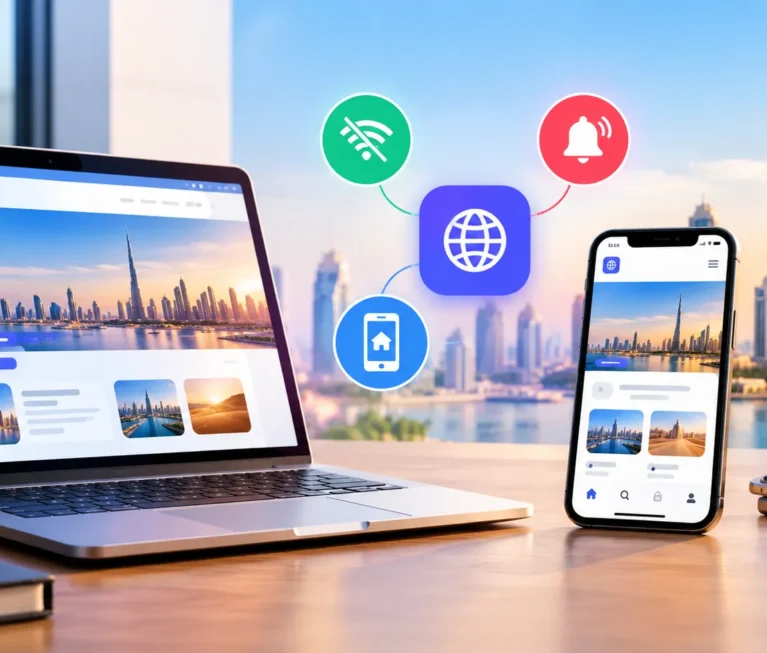
In a headless e-commerce architecture, the back-end operates as a content and commerce repository, exposing data and functionality through APIs. The front-end can be any device or interface capable of consuming these APIs, whether a website, mobile application, smartwatch, kiosk, or even a voice-activated assistant. This API-first commerce UAE approach provides maximum flexibility for businesses building unique customer experiences.
For UAE businesses pursuing omnichannel commerce UAE strategies, this separation means you can deploy consistent commerce capabilities across every customer touchpoint without rebuilding your entire platform each time you add a new channel.
How Headless Commerce Works: Front-End and Back-End Decoupling
The technical foundation of headless commerce rests on decoupled commerce systems where communication flows exclusively through APIs. The back-end commerce engine handles all core functions including product catalog management, pricing, inventory tracking, order processing, customer data, and payment processing.
When a customer interacts with any front-end touchpoint (such as browsing products on a mobile app), the interface makes API calls to the back-end to retrieve product information, check availability, process transactions, and update order status. The back-end responds with data, which the front-end then presents according to its own design and user experience requirements.
This architecture enables development teams to work independently on front-end experiences and back-end functionality. Designers and front-end developers can iterate rapidly on customer-facing interfaces without touching the commerce engine, while back-end teams can enhance functionality, integrate new payment gateways, or optimize performance without disrupting the user experience.
The API development and integration services expertise becomes critical in this architecture, as the quality and performance of your APIs directly impact the entire system’s effectiveness.
Key Benefits of Headless Commerce for UAE Businesses
UAE businesses adopting headless commerce architecture gain several strategic advantages aligned with the region’s competitive retail environment and customer expectations.
Omnichannel flexibility: Deploy consistent commerce experiences across web, mobile, social commerce, marketplaces, physical stores, and emerging channels without platform limitations. A customer can start browsing on Instagram, continue on your mobile app, and complete purchase in-store with seamless continuity.
Faster time to market: Front-end teams can launch new experiences, seasonal campaigns, or regional variations without waiting for back-end changes. For UAE retailers managing multiple markets across the GCC, this agility is invaluable during peak seasons like Ramadan, Dubai Shopping Festival, or other major retail events.
Enhanced performance: Purpose-built front-ends optimized for specific devices and contexts deliver superior speed and user experience compared to one-size-fits-all traditional platforms. This matters significantly in the UAE where mobile commerce dominates and page speed directly impacts conversion rates.
Technology freedom: Choose best-of-breed technologies for each layer. Build your front-end with React, Vue.js, or any preferred framework while your back-end uses commerce platforms like Shopify Plus, BigCommerce, commercetools, or custom solutions.
Future-proof infrastructure: Add new touchpoints as they emerge (AR shopping, voice commerce, connected vehicles) by simply building new front-ends that connect to your existing commerce APIs, rather than replacing your entire platform.
Personalization capabilities: Integrate advanced personalization engines, AI-driven recommendations, and dynamic content more easily through API connections, delivering the tailored experiences UAE consumers increasingly expect.
Headless vs Traditional E-commerce: Which Fits Your Business?
Understanding when headless commerce makes sense requires comparing it honestly against traditional e-commerce platforms still serving many businesses effectively.
Traditional e-commerce platforms (like standard Shopify, WooCommerce, or Magento installations) provide integrated front-end and back-end in a unified package. They offer faster initial setup, lower entry costs, extensive pre-built themes, and require less specialized technical expertise. For businesses with straightforward requirements, limited development resources, or those just entering e-commerce, traditional platforms often represent the practical choice.
Headless commerce suits businesses with specific needs: those requiring highly customized customer experiences, managing multiple touchpoints beyond a standard website, operating in competitive markets where differentiation matters, or scaling rapidly and needing flexible architecture. UAE businesses in fashion, luxury goods, electronics, and other competitive verticals often fall into this category.
Consider headless when you need unique brand experiences that pre-built themes cannot deliver, when you are investing in mobile apps or other channels requiring native experiences, when your development team has the API and modern framework expertise, or when you anticipate significant growth requiring architectural flexibility.
Traditional platforms work well when speed to market matters more than customization, when budget constraints limit development investment, when your team lacks headless development expertise, or when your business model centers on a single primary sales channel.
Many UAE businesses are exploring hybrid approaches, maintaining traditional platforms while adding headless front-ends for specific high-value touchpoints like mobile apps or international markets.
Popular Headless Commerce Platforms and Technologies
The headless commerce ecosystem includes both commerce back-ends and front-end technologies that work together in decoupled architectures.
Commerce back-ends: Shopify Plus offers headless capabilities through its Storefront API while maintaining its user-friendly admin. BigCommerce provides robust headless options with strong API coverage. Commercetools is a cloud-native, API-first platform built specifically for headless implementations. Adobe Commerce (Magento) supports headless through its PWA Studio and GraphQL APIs. Salesforce Commerce Cloud offers composable architecture options for enterprise implementations.
Front-end frameworks and tools: React and Next.js dominate headless front-ends with server-side rendering and excellent performance. Vue.js and Nuxt.js provide alternative frameworks with strong ecosystems. Gatsby specializes in static site generation for content-heavy commerce sites. Frontend-as-a-Service platforms like Vue Storefront and Front-Commerce offer pre-built, customizable storefronts that connect to various back-ends.
Content management: Headless CMS platforms like Contentful, Sanity, or Strapi often pair with headless commerce to manage marketing content separately from product data, enabling marketing teams to update content independently.
UAE businesses typically benefit from platforms with strong regional payment gateway support, Arabic language capabilities, and infrastructure that serves the Middle East market effectively. Working with experienced ecommerce development UAE teams ensures proper platform selection and implementation.
When Headless Commerce Makes Sense (and When It Doesn’t)
The decision to adopt headless commerce architecture should align with specific business circumstances and strategic objectives.
Headless makes sense when: Your brand requires distinctive customer experiences that differentiate from competitors. You are launching or heavily investing in mobile apps, voice commerce, or IoT channels. Your business operates across multiple regions or brands requiring different front-ends sharing commerce infrastructure. You have experienced development teams comfortable with APIs and modern JavaScript frameworks. Your growth trajectory justifies the investment in flexible, scalable architecture. You need to integrate specialized tools for personalization, search, or other capabilities not available in traditional platforms.
Headless may not fit when: You are launching a new e-commerce business with limited resources and need to validate your market quickly. Your team lacks development expertise in API integration and modern front-end frameworks. Your requirements are well-served by standard platform features and themes. Budget constraints make the higher initial investment prohibitive. Your business model centers on a single channel (typically web) with no near-term plans for expansion. You prefer simplicity and integrated solutions over architectural flexibility.
For many UAE small and medium businesses, the path forward involves starting with traditional platforms to establish market presence and revenue, then migrating to headless architecture as complexity, scale, and differentiation needs grow. This phased approach manages risk while preserving future optionality.
Implementation Considerations for UAE E-commerce Businesses
Successfully implementing headless commerce in the UAE context requires attention to several technical and business factors.
Development expertise: Ensure your team or development partner has proven experience with API integration, your chosen front-end framework, and the specific commerce platform you are adopting. Headless implementations demand higher technical capability than traditional platforms.
Total cost of ownership: Headless commerce implementation cost UAE typically runs higher than traditional platforms initially, with ongoing maintenance also requiring more specialized resources. Budget for front-end development, back-end platform fees, API infrastructure, hosting optimized for your architecture, and ongoing development as you evolve experiences.
Regional requirements: Verify your chosen platform supports payment gateways popular in the UAE (including local options), handles Arabic and English seamlessly, complies with UAE data regulations, and integrates with regional logistics and fulfillment providers.
Performance optimization: Implement edge caching, content delivery networks with Middle East presence, and optimize API response times to deliver the fast experiences UAE consumers expect, particularly on mobile devices.
Security considerations: API security becomes critical in headless architectures. Implement proper authentication, rate limiting, data encryption, and regular security audits to protect customer and transaction data.
Migration strategy: If moving from a traditional platform, plan a phased migration that minimizes business disruption. Many businesses run both systems in parallel during transition, gradually shifting traffic to the new headless implementation.
Partnering with agencies offering comprehensive web development services that understand both the technical architecture and UAE market context significantly increases implementation success rates.
Real-World Use Cases: Headless Commerce in Action
Headless commerce architecture enables specific use cases particularly valuable for UAE businesses competing in sophisticated markets.
Luxury retail omnichannel: High-end fashion and jewelry brands use headless architecture to deliver premium experiences across web, mobile apps, in-store tablets, and clienteling tools, maintaining brand consistency while optimizing each touchpoint. Sales associates access the same product information and customer history whether serving clients in Dubai Mall or remotely via WhatsApp commerce.
Rapid market expansion: Regional retailers expanding across GCC markets deploy market-specific front-ends (different languages, currencies, cultural adaptations) while sharing a unified commerce back-end, dramatically reducing the complexity and cost compared to managing separate platforms per market.
Mobile-first electronics retail: Consumer electronics retailers in the UAE, where mobile dominates shopping behavior, invest heavily in native mobile app experiences built on headless architecture, delivering performance and features impossible in traditional mobile web while maintaining web presence for research and discovery.
Content-rich lifestyle brands: Fashion and lifestyle businesses combine headless commerce with headless CMS to publish editorial content, style guides, and influencer collaborations seamlessly integrated with commerce, creating magazine-like experiences that drive engagement and sales.
Subscription and membership models: Businesses offering subscriptions, memberships, or loyalty programs integrate specialized subscription management platforms via APIs with custom front-ends designed specifically for retention and recurring revenue models.
These use cases share common themes: the need for differentiated experiences, multiple touchpoints requiring optimization, and businesses where customer experience directly impacts competitive position and unit economics.
As UAE e-commerce continues maturing and customer expectations rise, headless commerce architecture provides the foundation for businesses ready to invest in flexible, scalable infrastructure that supports innovation rather than constraining it. The approach demands higher initial investment and technical capability but delivers strategic advantages for businesses where differentiation, omnichannel presence, and customer experience drive success. Whether headless commerce fits your business depends on your specific circumstances, growth trajectory, and competitive positioning, but understanding the architecture and its implications is essential for any UAE business planning its e-commerce future in 2026 and beyond.
For businesses exploring advanced e-commerce architectures, consulting with teams experienced in both development and the specific demands of UAE markets ensures technical decisions align with business objectives and market realities.