





 Post by
 Progressive web app development UAE is transforming how businesses deliver mobile experiences to customers. In 2026, UAE companies are increasingly choosing PWAs over traditional native apps to reach users faster, reduce development costs, and deliver app-like experiences without the friction of app store downloads. Whether you run an ecommerce store in Dubai, a hospitality business in Abu Dhabi, or a service-based company across the Emirates, understanding when and how to leverage progressive web apps can give you a competitive edge.
This guide explores everything you need to know about progressive web apps in the UAE context, from core concepts and technical requirements to real-world use cases and development costs specific to the region in 2026.
What is a Progressive Web App (PWA)?
A progressive web app is a type of application built using standard web technologies (HTML, CSS, JavaScript) but designed to deliver an experience that feels like a native mobile app. PWAs load in web browsers but can be installed on a user’s home screen, work offline, send push notifications, and access device features, all without requiring download from the App Store or Google Play.
The term “progressive” refers to the technology’s ability to work for every user, regardless of browser choice, because they are built with progressive enhancement as a core principle. They start as simple websites but progressively enhance capabilities when the user’s device and network support them.
For UAE businesses, this means a single codebase that works across iOS, Android, and desktop browsers, significantly reducing the complexity compared to maintaining separate native applications for each platform.
PWA vs Native Mobile App: Which Should You Choose?

The decision between PWA development and custom mobile app development depends on your specific business needs, budget, and user experience requirements.
Choose a PWA when:
- You need to launch quickly with a limited budget
- Your primary goal is broad reach across all devices and platforms
- You want users to access your service without download friction
- Your app does not require intensive use of device-specific hardware
- SEO and discoverability through search engines matter to your strategy
- You want a single codebase to maintain instead of multiple native apps
Choose a native app when:
- You require advanced device features (complex camera functions, Bluetooth, background processing)
- Your app needs top-tier performance for graphics-intensive tasks or gaming
- You want deeper integration with platform-specific ecosystems
- Your business model relies on app store presence and discovery
- You need absolute control over every aspect of the user interface
Many UAE businesses in retail, hospitality, and professional services find that PWAs offer the perfect balance, delivering 80% of native app functionality at 40% of the development cost.
Key Benefits of PWAs for UAE Businesses
Progressive web apps UAE businesses are adopting offer several compelling advantages tailored to the local market dynamics:
Cost Efficiency: Developing and maintaining one progressive web app costs significantly less than building separate iOS and Android native applications. UAE SMEs particularly benefit from this streamlined approach.
Faster Time to Market: With a single codebase and no app store approval delays, you can launch and iterate your PWA much faster than native alternatives.
Instant Updates: Unlike native apps that require users to download updates, PWAs update automatically when users visit, ensuring everyone always has the latest version.
No Installation Friction: Users can start using your PWA immediately through their browser, with the option to install it to their home screen later. This dramatically reduces abandonment rates compared to forcing an app store download.
Improved Performance on UAE Networks: PWAs are designed to work efficiently even on slower connections, crucial for reaching users across different Emirates and network conditions.
Offline Functionality: Service workers enable PWAs to cache content and function even when users lose connectivity, essential for UAE’s diverse connectivity landscape from metro tunnels to remote areas.
Essential Features of a Progressive Web App
To qualify as a true progressive web app, your application should include these core technical features:
Service Workers: JavaScript files that run separately from the main browser thread, enabling offline functionality, background sync, and push notifications.
Web App Manifest: A JSON file that defines how your PWA appears when installed, including app name, icons, splash screen, and display mode.
HTTPS: Progressive web apps must be served over secure HTTPS connections to protect user data and enable service worker functionality.
Responsive Design: Your PWA must work seamlessly across all screen sizes, from mobile phones to tablets to desktop computers.
App-like Interface: Navigation patterns and interactions that feel native, with smooth animations and intuitive gestures.
Fast Loading: Initial load times under 3 seconds even on 3G networks, with instant subsequent loads through intelligent caching.
Push Notifications: The ability to re-engage users with timely, relevant updates even when they are not actively using your app.
PWA Development Technologies and Frameworks
Building robust progressive web apps in UAE requires the right technology stack. Popular frameworks and tools in 2026 include:
React with Next.js: Excellent for building complex, performant PWAs with server-side rendering capabilities.
Angular: Google’s comprehensive framework with built-in PWA support through Angular CLI.
Vue.js with Nuxt: Lightweight yet powerful option for creating fast, SEO-friendly progressive web apps.
Workbox: Google’s library for adding sophisticated service worker functionality and offline support.
Lighthouse: Essential auditing tool for measuring PWA quality, performance, accessibility, and best practices.
Professional web development services in the UAE typically leverage these modern frameworks to build scalable, maintainable progressive web apps that meet international standards.
Building Offline-First Experiences with PWAs
One of the most powerful features distinguishing PWAs from traditional web apps is offline-first design. This approach prioritizes functionality even when network connectivity is limited or absent.
Service workers intercept network requests and intelligently serve cached content when users go offline. For UAE businesses, this is particularly valuable in scenarios like:
- Hotel guests browsing services while in areas with weak WiFi
- Retail customers viewing product catalogs in underground parking areas
- Field service workers accessing job information in remote locations
- Commuters browsing services while traveling through connectivity dead zones
Effective caching strategies include cache-first (serve from cache, fall back to network), network-first (try network, fall back to cache), and stale-while-revalidate (serve cached content immediately while fetching updates in the background).
PWA Use Cases: Ecommerce, Hospitality, and Services in UAE
Ecommerce PWAs: Online retailers in Dubai and across the UAE are using PWAs to dramatically improve conversion rates. Fast loading times, offline browsing, and push notifications for cart abandonment and promotions create shopping experiences that rival native apps. For businesses planning an online store, ecommerce development UAE services increasingly recommend PWAs as the foundation.
Hospitality and Tourism: Hotels, restaurants, and tourism companies use PWAs to deliver booking interfaces, virtual concierge services, and destination guides that work offline. Guests can save information before traveling and access it without data roaming charges.
Professional Services: Consulting firms, real estate agencies, and healthcare providers use PWAs to deliver client portals, appointment booking systems, and document access with the reliability of native apps but the flexibility of the web.
Event and Ticket Services: PWAs excel at delivering tickets, event schedules, and venue maps that remain accessible offline throughout events.
News and Content Publishers: Media companies use PWAs to deliver fast-loading articles with offline reading capabilities and push notifications for breaking news.
PWA SEO Advantages Over Traditional Apps
Unlike native mobile apps that exist in walled app store gardens, progressive web apps are fully indexable by search engines, giving them a significant discoverability advantage.
Search engines like Google can crawl, index, and rank PWA content just like traditional websites. This means users can discover your services through organic search and land directly on relevant pages, not generic download screens.
PWAs also benefit from link equity, social sharing, and all the traditional SEO techniques that drive web traffic. For UAE businesses competing in local search, this makes PWAs far more discoverable than native apps that require users to already know your brand name to find you in app stores.
The combination of app-like engagement with web-like discoverability creates a powerful marketing advantage, especially for businesses targeting the competitive UAE market.
Progressive Web App Development Process
Building a successful PWA for the UAE market typically follows this process:
1. Strategy and Planning: Define business goals, target audience, core features, and success metrics. Determine whether PWA is the right solution for your specific needs.
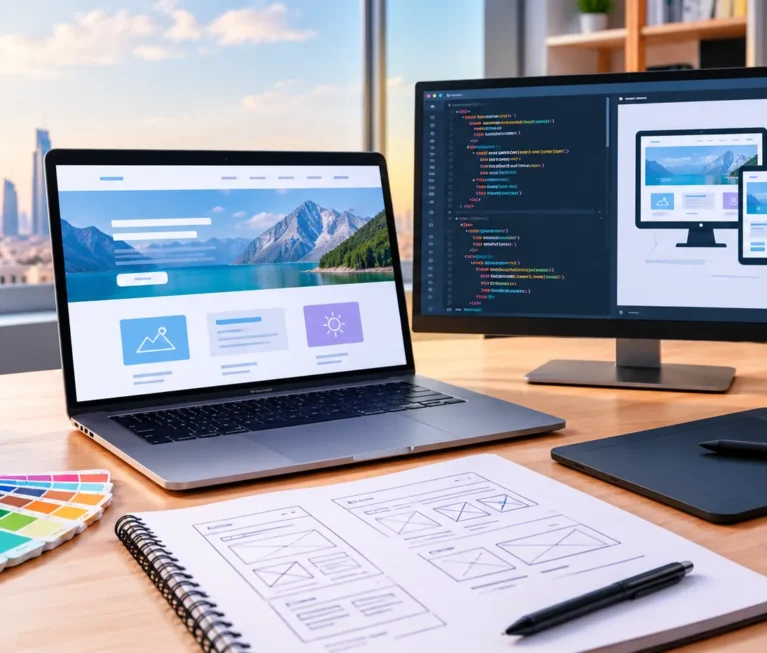
2. Design and Prototyping: Create user interface designs optimized for both web and app-like experiences. Design the app manifest, icons, and splash screens.
3. Development: Build the core application using your chosen framework. Implement service workers, caching strategies, and offline functionality.
4. Testing: Rigorously test across devices, browsers, and network conditions common in UAE. Use Lighthouse audits to ensure PWA standards compliance.
5. Deployment: Launch on HTTPS-enabled hosting. Configure service workers and ensure proper caching headers.
6. Optimization and Iteration: Monitor performance metrics, user engagement, and conversion rates. Continuously improve based on real user data.
Professional PWA development company UAE partners guide you through each phase, ensuring your progressive web app meets both technical standards and business objectives.
PWA Development Cost in UAE 2026
Progressive web app development cost UAE varies based on complexity, features, and the development partner you choose. In 2026, typical investment ranges include:
Basic PWA (simple content, offline reading): AED 15,000 to AED 35,000. Suitable for content publishers, small service businesses, or minimum viable products.
Standard PWA (ecommerce, booking system, user accounts): AED 35,000 to AED 75,000. Appropriate for most retail, hospitality, and service businesses.
Advanced PWA (complex integrations, real-time features, custom functionality): AED 75,000 to AED 150,000+. Required for enterprise applications, sophisticated platforms, or highly customized solutions.
These costs are typically 30% to 50% lower than developing equivalent native iOS and Android apps separately. When comparing to mobile app development cost UAE for native solutions, the savings become even more apparent when factoring in ongoing maintenance.
Factors influencing cost include design complexity, number of features, third-party integrations, backend infrastructure requirements, and whether you need custom illustrations or photography for your UAE-specific content.
The best approach is requesting detailed quotes from multiple development partners, ensuring they understand your specific business context and technical requirements.
Getting Started with PWA Development in UAE
Progressive web apps represent a compelling middle path between traditional websites and native mobile applications, particularly well-suited to the UAE business environment in 2026. They deliver app-like experiences without app store friction, work reliably across the Emirates’ varied connectivity landscape, and cost significantly less to develop and maintain than multiple native apps.
Whether you are launching a new ecommerce platform, upgrading an existing website, or building a customer service portal, PWA technology deserves serious consideration. The combination of broad reach, fast performance, offline capability, and SEO advantages makes progressive web apps an increasingly smart choice for UAE businesses aiming to deliver excellent mobile experiences without excessive investment.
When you are ready to explore progressive web app development UAE for your business, partner with experienced developers who understand both the technical requirements and the local market dynamics that will make your PWA successful.