





 Post by
 The UAE technology sector is experiencing unprecedented growth, with businesses increasingly turning to Software as a Service (SaaS) to deliver scalable, cost-effective solutions to global markets. SaaS development UAE has become a critical capability for startups and enterprises alike, offering the flexibility to build subscription-based cloud software that serves customers anywhere while leveraging the Emirates’ strategic position as a regional tech hub.
Whether you’re a startup founder with a vision for the next big SaaS product or an established business looking to transform your software delivery model, understanding the nuances of SaaS application development in the UAE context—from architecture decisions to regulatory compliance—is essential for success in 2026.
What is SaaS Development and Why It Matters for UAE Businesses
SaaS application development refers to creating cloud-based software that customers access via subscription rather than purchasing and installing locally. Unlike traditional custom software development, SaaS products are built for multi-user access, continuous updates, and centralized maintenance.
For UAE businesses, the SaaS business model UAE offers compelling advantages. The subscription-based software development approach provides predictable recurring revenue, eliminates complex installation processes for customers, and allows you to serve regional and international markets from a single codebase. Dubai and Abu Dhabi’s robust cloud infrastructure, combined with government initiatives supporting digital transformation, create an ideal environment for SaaS ventures.
The model is particularly powerful in sectors where UAE companies have domain expertise—fintech, proptech, logistics, education technology, and healthcare—allowing local developers to build specialized vertical SaaS solutions that address regional pain points while scaling globally.
Key Components of a Successful SaaS Application
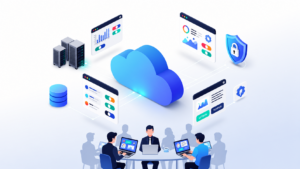
Every successful SaaS product combines several critical components that work together to deliver value. The foundation includes a robust authentication and authorization system that manages user access securely across organizations and permission levels.
A comprehensive subscription and billing engine handles plan management, payment processing, trial periods, and invoice generation. This component must integrate with regional payment gateways popular in the UAE and support multiple currencies for international expansion.
The user interface must be intuitive and responsive, working seamlessly across devices. Since SaaS customers can switch providers easily, exceptional user experience is non-negotiable.
Analytics and reporting capabilities give customers insights into their usage while providing you with data to improve the product. Dashboards should surface key metrics relevant to your specific vertical.
A well-designed admin panel allows you to manage customers, monitor system health, configure features, and provide support efficiently. Finally, comprehensive API access enables customers to integrate your SaaS product with their existing tools, significantly increasing stickiness.
SaaS Architecture Patterns: Multi-Tenant vs Single-Tenant
The architectural foundation of your SaaS product fundamentally impacts scalability, cost, and customization capabilities. Multi-tenant architecture serves multiple customers from a single application instance and shared database infrastructure, with logical data separation ensuring each tenant’s information remains isolated.
This approach maximizes resource efficiency and reduces infrastructure costs, making it ideal for standardized SaaS products serving SMBs or individual users. Updates deploy once for all customers, simplifying maintenance. However, customization options are limited, and one tenant’s activity can potentially affect others’ performance without careful resource management.
Single-tenant architecture dedicates separate application instances and databases to each customer. This model offers superior isolation, unlimited customization potential, and predictable performance, making it suitable for enterprise clients with specific compliance or security requirements common in UAE government and financial sectors.
The trade-off is significantly higher infrastructure costs and more complex deployment and update processes. Many modern SaaS companies adopt hybrid approaches, offering multi-tenant architecture as standard while providing single-tenant options for enterprise customers willing to pay premium pricing.
The SaaS Development Process: From Idea to Launch
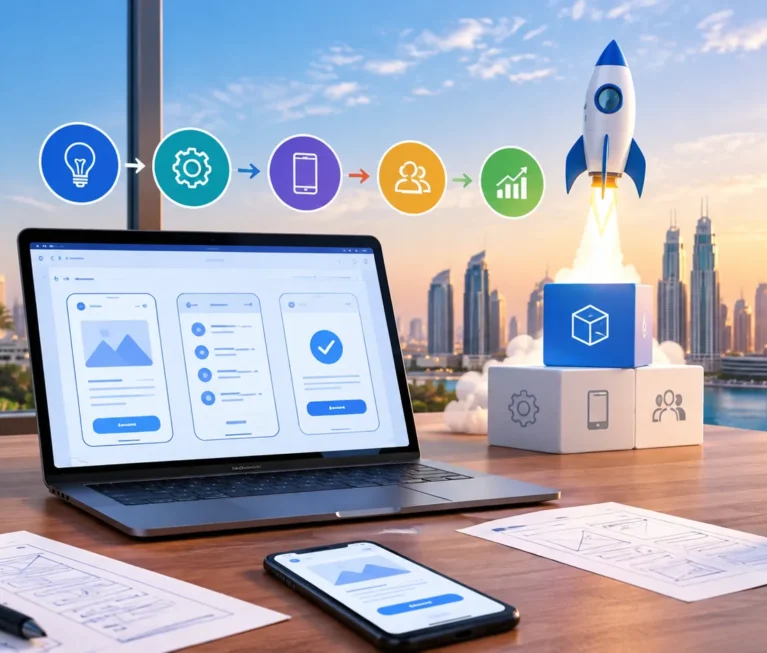
Building a successful SaaS product follows a structured journey. Begin with market validation—survey potential customers, interview target users, and validate that your proposed solution addresses a genuine pain point worth paying for. The UAE market responds particularly well to solutions that improve efficiency or compliance.
Next, create a minimal viable product (MVP) focused on core functionality that delivers immediate value. Resist the temptation to build every feature upfront. Launch with the essentials, gather user feedback, and iterate rapidly.
During development, implement cloud-native practices from day one. Design for horizontal scaling, build stateless services, and leverage managed cloud services to reduce operational overhead.
Establish continuous integration and deployment pipelines that enable frequent, reliable releases. Automated testing ensures new features don’t break existing functionality.
Before public launch, conduct beta testing with a select group of customers who provide detailed feedback. Use this phase to refine onboarding flows, fix critical bugs, and validate your pricing model.
Post-launch, prioritize customer success and retention over rapid feature expansion. Monitor usage patterns, provide responsive support, and build features that existing customers actually request rather than assumed needs.
Choosing the Right Technology Stack for Your SaaS Product
Your technology stack decisions impact development speed, scalability potential, and long-term maintenance costs. For cloud software development UAE projects, certain patterns have proven particularly effective.
For backend development, Node.js offers excellent performance for real-time features and has a vast ecosystem. Python (Django or Flask) excels for data-intensive applications and AI integration. Go provides superior performance for high-throughput systems. Choose based on your team’s expertise and specific use case rather than trends.
Modern frontend frameworks like React, Vue.js, or Angular enable rich, responsive user interfaces. React’s component ecosystem and hiring pool make it popular for UAE SaaS startups.
For databases, PostgreSQL offers robust relational capabilities with JSON support for flexibility. MongoDB suits document-heavy applications. Consider managed database services from AWS, Azure, or Google Cloud to reduce operational burden.
Containerization with Docker and orchestration via Kubernetes has become standard for SaaS products, enabling consistent deployments and efficient scaling. API-first architecture using REST or GraphQL ensures your SaaS product integrates smoothly with other tools.
Select cloud providers with data centers in the UAE or nearby regions to meet data residency requirements and minimize latency for local users. AWS (Bahrain), Microsoft Azure (UAE), and Google Cloud (Qatar) all serve the region.
SaaS Pricing Models That Work in the UAE Market
Pricing strategy directly impacts customer acquisition and revenue growth. The per-user pricing model charges based on the number of active users, creating predictable scaling as customer organizations grow. This works well for collaboration tools and team software.
Usage-based pricing charges according to consumption metrics—API calls, storage, transactions processed, or messages sent. This aligns costs with value delivered and appeals to customers wanting to start small and scale.
Tiered pricing offers good-better-best packages with increasing features and limits. This approach simplifies decision-making and creates natural upgrade paths. Most UAE SaaS companies find success with 3-4 clearly differentiated tiers.
Freemium models provide basic functionality free while charging for advanced features or higher limits. This reduces adoption friction but requires significant free user volume to generate meaningful paid conversions.
Regardless of model, consider offering annual payment options with discounts. UAE businesses, particularly enterprises, often prefer annual commitments that simplify budgeting. Price in AED for local customers while supporting USD and EUR for international markets. Trial periods of 14-30 days are standard and significantly improve conversion when combined with proactive onboarding.
Data Residency and Compliance for SaaS in UAE
SaaS compliance requirements UAE encompass several critical areas. Data residency regulations require certain data types—particularly personal information of UAE residents and government-related data—to be stored within UAE borders or approved jurisdictions.
The UAE Personal Data Protection Law (PDPL), implemented in 2022, governs how SaaS applications collect, process, and store personal data. Your application must obtain explicit consent, provide transparency about data usage, allow users to access and delete their data, and implement appropriate security measures.
For SaaS products serving healthcare clients, compliance with health data regulations is mandatory. Financial services SaaS must meet Central Bank guidelines and potentially obtain regulatory approvals.
If your SaaS serves international customers, you may need GDPR compliance for European users or CCPA compliance for California residents. Design your data handling practices to meet the highest standard you’ll encounter.
Document your compliance measures clearly. Enterprise customers in the UAE routinely request detailed security questionnaires and compliance documentation during procurement. Having SOC 2, ISO 27001, or similar certifications significantly improves enterprise sales, though they’re expensive for early-stage startups.
Consider cloud infrastructure choices carefully, ensuring your provider offers UAE-region data centers if your compliance requirements demand local residency.
Security Considerations for SaaS Applications
Security breaches can destroy a SaaS business overnight. Implement security as a foundational element, not an afterthought. All data transmission must use TLS encryption (HTTPS), and sensitive data at rest should be encrypted using industry-standard algorithms.
Authentication should support multi-factor authentication (MFA), particularly for administrative access. Consider integrating with enterprise single sign-on (SSO) providers like Azure AD or Okta for business customers.
Implement robust authorization with role-based access control (RBAC) ensuring users can only access data and features appropriate to their permission level. In multi-tenant architectures, tenant isolation must be absolute—no query should ever accidentally expose one customer’s data to another.
Regular security audits and penetration testing identify vulnerabilities before attackers exploit them. For SaaS products handling sensitive data, annual professional security assessments are advisable.
Maintain comprehensive audit logs tracking who accessed what data and when. These logs are essential for compliance and investigating security incidents.
Develop and document an incident response plan. Know exactly what steps you’ll take if a breach occurs, including customer notification procedures and regulatory reporting requirements.
Keep all dependencies and frameworks updated with security patches. Automated dependency scanning tools can alert you to known vulnerabilities in your codebase.
Scaling Your SaaS Product: Infrastructure and Performance
How to build SaaS product in UAE requires planning for growth from the start. Design your application architecture for horizontal scaling—adding more servers to handle increased load rather than requiring larger, more powerful servers.
Implement caching aggressively at multiple layers. Redis or Memcached can cache database queries, API responses, and session data, dramatically reducing database load and response times.
Use content delivery networks (CDNs) to serve static assets globally with low latency. Even if your application servers are UAE-based, CDNs ensure fast asset delivery to international users.
Database scaling often becomes the bottleneck. Implement read replicas to distribute query load. For write-heavy applications, consider database sharding or distributed database solutions.
Asynchronous processing handles time-consuming tasks without blocking user requests. Background job queues process emails, reports, and integrations while returning immediate responses to users.
Monitor application performance continuously. Tools like New Relic, Datadog, or open-source alternatives help identify bottlenecks before they impact users. Set up alerts for critical metrics—response times, error rates, and resource utilization.
Load testing simulates high user volumes, revealing performance issues in controlled environments. Test before major launches or promotional campaigns that might spike traffic.
Auto-scaling policies automatically add or remove infrastructure based on demand, optimizing costs while maintaining performance during traffic spikes.
SaaS Development Cost Breakdown in UAE 2026
Understanding SaaS development cost UAE helps set realistic budgets. For a minimum viable product with core features, expect development costs between AED 150,000 to AED 400,000 depending on complexity. This includes frontend and backend development, basic integrations, and essential security implementation.
A mid-market SaaS product with advanced features, multiple integrations, and sophisticated user management typically ranges from AED 400,000 to AED 1,000,000. Enterprise-grade SaaS platforms with complex compliance requirements, extensive customization capabilities, and advanced security features can exceed AED 1,500,000.
Development costs include UI/UX design (AED 30,000-80,000 for comprehensive work), backend development (typically 40-50% of total development budget), frontend development (30-40%), quality assurance and testing (15-20%), and project management (10-15%).
Beyond initial development, budget for ongoing monthly costs. Cloud infrastructure for a growing SaaS typically runs AED 5,000-30,000 monthly depending on user base and data volumes. Third-party services—payment gateways, email delivery, SMS, monitoring tools, and analytics—add AED 2,000-10,000 monthly.
Maintenance and updates require dedicated development resources, generally 20-30% of initial development costs annually. Customer support costs scale with user base but plan for at least one dedicated support person as you approach 100 paying customers.
Marketing and customer acquisition often exceed development costs for SaaS businesses. Budget appropriately for growth, as the best SaaS development companies UAE can build excellent products that fail due to insufficient go-to-market investment.
Building a successful SaaS product in the UAE market requires balancing technical excellence with business acumen. The region’s growing digital economy, supportive regulatory environment, and strategic geographic position create exceptional opportunities for well-executed SaaS ventures. By following proven architectural patterns, selecting appropriate technology stacks, implementing robust security and compliance measures, and planning for scale from the beginning, UAE-based SaaS companies can build products that serve not just local markets but customers globally. Success ultimately depends on solving real problems better than alternatives while delivering exceptional user experiences that justify recurring subscription investments.